Showing posts with label Cuddalore Devine Trip. Show all posts

Tuesday, December 13, 2016

Sri Virudhagireeswarar Temple, Virudhachalam, Cuddalore

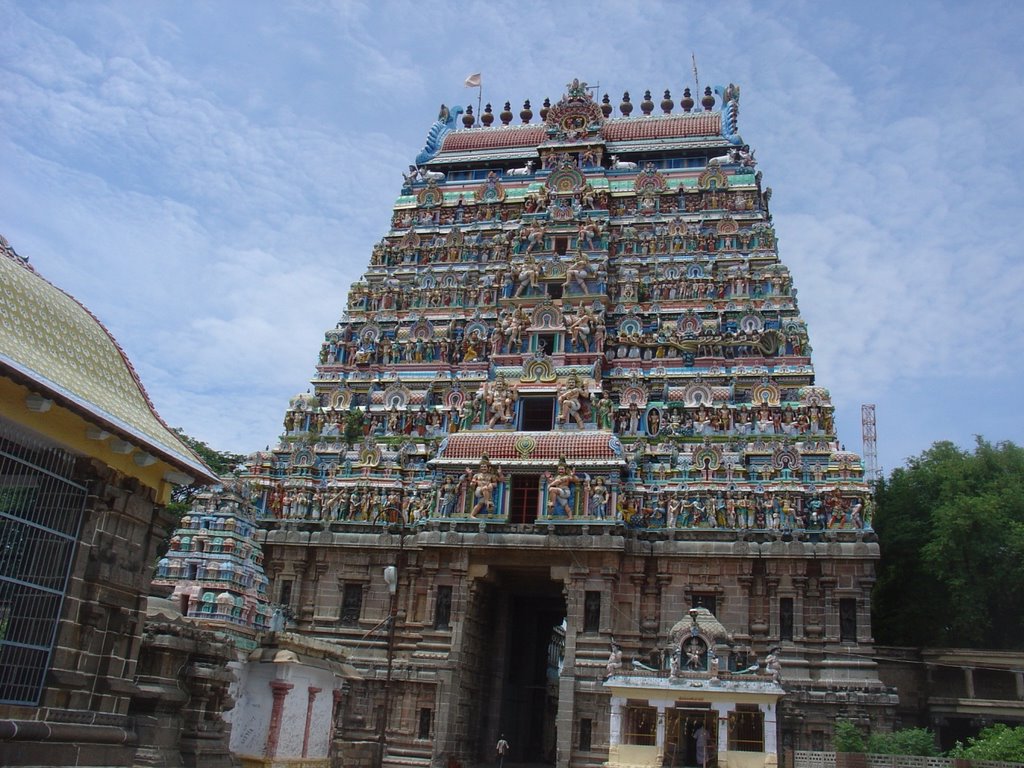
The Vriddhagiriswarar Temple is a Hindu temple in the town of Vriddhachalam, Cuddalore district. The presiding deity is Vriddhagiriswarar. The temple gives its name to the town of Vriddhachalam.

During the days of Saivite Saints Appar, Gnanasambandar and Sundarar, the place was known as Pazhamalai in Tamil and changed to the Sanskrit version Vruddhachalam in the days that followed.  Vruddham means ancient and Achalam hill.  It is also said that Lord Shiva appeared here only in the form of this mount and other mounts came into being only later, according to scriptures.  Sage Vibasithu had a dip in the Manimutha river and undertook the renovation of his temple.  He gave the workers the leaves of the Vanni tree which later changed into coins to the value due to the workers based on the quantum and quality of his work, is a story believed by generations of devotees.  The Vanni tree is 1700 year old, say researchers. 

Sundarar passed through this place without singing the glory of the Lord.  He was stopped by the Lord, made him sing and gifted 12,000 gold coins, placed it in Manimutha River and directed him to collect it from the temple tank in Tiruvarur, according to sthalapurana.


Temple's Speciality

Lord Shiva in the temple is Swayambumurthy. Girivalam-cicumambulating the hill takes place on each Poornima-full moon days. The age of the holy tree Vanni is over 1700 years. It is the faith of the devotees that salvation is surety if he/she is born in the place, or live in the place, or pray the Lord here, or even thinking of Him even while elsewhere and die in this place. One of the above five criteria will free him/her from the cycle of births and deaths. As in Kalahasthi temple, Lord Vinayaka is in an underground shrinewith 18 steps to get in for worship. When the world was destroyed by pralaya floods, it is said that this holy place-Vruddhachalam stood unaffected and fully alive. Of the 1008 Shiva shrines of the country considered in high esteem, four lead this divine list of which Vruddhachalam is one.

Greatness Of Temple


Lord Muruga with His consorts Valli and Deivanai graces the devotees from a shrine between Lord and Mother Vruddhambika shrine with 28 Shivalingas installed in accordance the Saiva Agama rules.  Lord Muruga is in a standing posture.  There are chakras above him promising the devotee that he would be blessed with all his wishes.  Lord Muruga with Chakras is rarely seen in a few Shiva temples only.  This is one among them. 

Number five has a significance in this temple.  Murthis are five –Lords Vinayaka, Muruga, Shiva, Shakthi and Chandikeswara.  Lord is praised by five names – Vruddhagiriswarar, Pazhamalai Nathar, Vruddhachaleswarar, Mudhu Kundreeswarar and Vruddhagiri.  There are five Vinayakas in the temple – Aazhathu Vinayakar, Mattru Uraitha Vinayaka, Muppillayar, Dasabhuja Ganapathy and Vallabha Ganapathi.  Five Rishis had the darshan of Lord – Romesa, Vibasiddhu, Kumaradeva, Nada Sharma and Anavardhini.  There five towers in the temple at east, west, south, north and Kandarathithan (a Chola king) gopuram.
There are five prakaras – called Tiruchuttru in Tamil.  Car-Rath, Kailaya, Vanniyadi, 63 Nayanmar Chuttru and Panchavarna Chuttru.  There are five Kodimarams-flag post with with five Nandhis – Indra Nandhi, Vedha Nandhi, Atma Nandhi, Maalvidai Nandhi and Dharma Nandhi.  There are five inner Mandaps – Artha, Idaikazhi, Thapana, Maha and Isai Mandapams.  Outer Mandaps are 20 pillar mandap, Deeparadhana, 100 pillar mandap, Vipachithu and Chitra mandapam. 

Five time puja is followed in the temple - Tiruvanandal, Kalasandhi, Uchi Kala, Sayaraksha and Arthajama at scheduled times from early morning till night.  The temple has five cars-raths for Lords Vinayaka, Muruga, Pazhamalai Nathar, Mother Periyanayaki and Sri Chandikeswara.  The place has five names – Tirumudhu Kundram, Vruddha Kasi, Vruddhachalam, Nerkuppai and Mudhugiri.
Saint Sundarar was on a fund raising mission to feed the devotees on the Panguni Uthiram festival in Tiruvarur.  Lord of this temple donated 12,000 gold coins to Sundararar.  Beware of robbers on the way, he placed all the coins in the Manimutha River and collected it in the tank in Tiruvarur.  This is a strange precaution.  Money placed in a river cannot be collected from a tank that has no link with each other.  But this miracle happened.  Thus came the proverb, “losing in the river and searching in the tank”.  As doubting Thomas, Sundarar wanted to test the touch of the gold he took from the tank in Tiruvarur.  Lord proved the quality of the gold with Lord Vinayaka as a witness who confirmed the touch.  Hence, Vinayaka in the inner prakara of the temple is praised as Mattru-touch, Uraitha-confirmed, Vinayaka- Mattru Uraitha Vinayaka.
The Mudhu Kundram temple was renovated by Maharshi Visithu, it is said.  Mudhu Kundram is situated on the banks of Manimutha River.  As a tradition, Mother Durga is the ruler in Shiva temple.  Here, She appears along with Mother Umayambika-Vruddhambika in a standing posture.
Of the 1008 noted Shiva temple, four are considered very sacred. Mudhukundram temple is one among the four.  The place stood majestically alive even during the Maha Pralaya that destroyed the world.  During the renovation of the temple, Vibasithu Rishi used to give the leaves of the Vanni tree as wages to the workers.  Based on the quantum and quality of the work of the labourer, it fetched the due value, it is said.  The ashes of the dead when dissolved in Manimutha River change into a stone and stay underneath, according to sthalapurana.
There are many hymns sung by Tamil Pandits praising this place, Lord and Ambica.  Perianayaki Ammai Pathigam, Kshethira Kovai Venba, Pazhamalai Nathar Andhadhi, Perianayaki Virutham, Bikshadana Navamani Malai, Guru Darishana Pathigam, Pillai Thamizh are a few to mention.  During his visit to this place, the king of Karnataka suffered due to hunger.  Mother Peria Nayaki, as a young woman fed him with milk and named him Kumara Deva. 
Lord Shiva as Nataraja danced in Thillai for a contest.  He played here for His own joy.
Vruddhachalam is as famous as Kasi-Varanasi as a salvation promising land known as Vruddhakasi.  It is also claimed that the benefit measure is a little bit more here than Kasi, hence the saying “Kasiyil Veesam Adhigam in Vruddhakasi”.  As believed in Kasi, here too Mother Vruddambika places the departed souls on Her lap and fan them with the pallu of Her Sari while Lord Shiva chants the Namshivaya mantra in the ears of the dead ensuring his/her salvation., according to Sthalapurana.
Vruddhambika means Goddess of elderly age.  Devotee Guru Namshivayar stayed in this place for a night on his way to Chidambaram.  He was very hungry and called Mother with a verse with a word Kizhathi.  Mother Periyanayaki came there as an old woman and replied that Kizhavi-old woman cannot bring food, only young woman can.  The devotee sang another verse describing the youthfulness of Ambica.  She appeared as a young beautiful woman and fed the devotee and thus came to be known as Balambika – young Mother. 
Saint Arunagiriar had sung 10 Tirupugazh hymns on Lord Muruga of this temple. The temple is also praised by Kuamaradeva, Shivaprakasar, Vadalur Vallalar Ramalinga Adigalar in their hymns.


Festival

10 day Brahmmotsavam drawing a huge crowd of devotees with a car festival on the 9th day in Masi (February-March); 10 day Aadi Pooram especially for Ambica with Wedding Festival and flag hoisting and Ambica procession; 10 day Vaikasi Vasanth Usav in May-June; Aani Tirumanjanam in June-July; Arudra Darshan n December-January; Skanda Sashti-Soora Samharam in October-November are the festivals celebrated in the temple. Special abishek is performed to procession deity Peria Nayakar on Poornima-full moon days. The devotee crowd in the temple is usually huge on Poornima-full moon and Amavasya-new moon days.


Wednesday, December 7, 2016

Thiru ArutPrakasa Vallalar Deiva Nilayam or Satya Gnana Sabha, Vadalur, Cuddalore

Satyagnana Sabha or the "Temple of Wisdom" is an octagonal structure constructed by the Saivite saint Ramalinga Swamigal in the town of Vadalur in Cuddalore district. The sanctum sanctorum of this temple is concealed from the main hall by seven curtains which are parted only on Thai Poosam day. All the four towers of the Chidambaram temple are visible from the sabha.The Satyagnana Sabha consists of three Saba, Chirchabai(சிற்சபை) which represents moon or left eye of human , porchabai(பொற்சபை) or golden sabai which represents sun or right eye of human and gyana sabai(ஞான சபை) which represents the third eye or wisdom of human.The building was built in octagonal shape which represents 8 bones in human skull.Only two Saints established Sanga(sabai) in Indian, World history one is Buddha another is Vallalar.All Saivet matts are for religious pupil where common man go there on need basis but a Sangam or Sabai is a place where common people can join organize and they can Interact with spiritual people. Vallalar clearly mentioned in his poetry as below "எச்சபை பொதுவென இயம்பினர் அறிஞர்கள் அச்சபை யிடங்கொள்ளும் அருட்பெருஞ் ஜோதி" meant that ."This Saba is a common place for every one who follows sanmargam(good way) ". Near to Satyagnana Sabha there is tharumasalai where free food offered to thousands of people every day.the tharumasalai has stove which is lighted by Ramalinga swamigal (Vallalar) still in use. Aside of tharumasalai the jeeva samathi of kalpattu ayyaa , who is the second sanmaargi who attained dheeksha from vallalar.

History

Before going into the details of the temple history, it would not be out of place to mention briefly the political and social condition of India, when Sri Ramalingaswamigal known as Vallalar came into the religious scene in Tamilnadu with a strong focus on educating people on the principles of religion, giving it a new face to foster tolerance and unity among the communities professing various faiths.

India was always the target of foreign powers to establish their empire here totally destroying the culture, civilization and the original religions of the country. They wanted to introduce their own language and religion and make the country their own with their own designs and part of their empire headquartered elsewhere. The years between 1757 and 1857 were so testing in nature that foreign politicians played their role effectively in India. Their intention was to promote their own religion. They wanted to eliminate the domestic religions humiliating our Acharyas.

Director of the East India Company, Mangles spoke in the British parliament in so passionate a language that no consideration should be entertained on Indian philosophies and that the country should be brought under the total control of their religion.

Lord Macaulay, who introduced English in education in India in the year 1836 in Bengal claimed that if the system was meticulously followed there would not be a single Hindu or Muslim in the country. He also said that he wanted to create a new society in India who would be Indians by birth but British by spirit.

But little he realized that he was founding a revolution. After the Sepoy Mutiny, Queen Victoria realized that it was impossible to sustain the British empire in India offending the religions of the country and declared that British rule in India would not interfere in the religious freedom of the people. Yet, the political developments opened the eyes of the educated and forced them to realize it was necessary to eliminate the superstitions among the people and the divisions caused by castes and creed. India needed great and dedicated reformers.

Bengal gave Raja Ram Mohan Roy and Sri Ramakrishna Paramahamsa, Gujarat Dayananda Saraswathi and Tamilnadu Sri Ramalinga Arutprakasa Vallalar to create a renaissance in the life of Indians. They gave a new definition to spirituality and their approach was so broad and noble that accommodated even those belonging to imported religions.

Sri Vallalar wanted to see a single ‘one world’ united by souls. His mission was entirely different from other Acharyas.

Sri Arutprakasa Ramalinga Vallalar was born on October 5, 1823 on a Sunday, as a Sun to dispel the darkness created by total misunderstanding of religions – illusions, says learned Tamil scholar Silambu Selvar Ma. Po. Si. in his book Vallalar Kanda Orumaipadu – Integration of souls as propagated by Vallalar.

The life of Vallalar was one with continuous struggles. His hymns Arutpa was criticized as Marutpa (illusion hymns) by some pundits. They too later realized that Vallalar’s Samarasa Suddha Sanmargam was an ideal religion that gave a new shape to our faith accommodating humanity as whole.

Sri Arutprakasa Ramalinga Vallalar was born to Ramiah and Chinnammai couples who lived in Marudur. Chinnammai had the habit of feeding at least one poor devotee before she took food. Son also followed the footprints of the mother. This is what prompted Ramalingaswamigal to establish the Dharma Sala.

Hexaganal shaped Sabha: To impress the truth that God helps devotees as a light-lamp, Vallalar created this lotus designed Sabha, lighting the lamp in the front of the design. During the daily pujas at 11.30 a.m. and 7.30 p.m. it is performed for this lamp and the curtains behind it. The Deepa offering (Deepa aaradhana) are shown in the small and golden sabhas (Chirchabai and Porchabai). There is a board reading, "only vegetarians allowed." Those desirous of dropping meat eating come here.

The Arutperunjothi Agaval authored by Vallalar is engraved here. The lamp lit by Vallalar in Sathya Gnana Sabha is still burning. There is a mirror in front of the lamp and curtains of black, blue, green, red, golden and white and multi colours. When the curtains are removed, the jyoti could be seen through the mirror. That is to say that man could see the light in him if he removes the seven bad traits in him.

Greatness Of Temple

The oven that never extinguishes: The oven lighted by Vallalar about 142 years ago, on May 23, 1867 in the Sathya Dharma Sala never extinguishes and continue to burn till today. Vallalar started the Annadhana – feeding the poor. The oven is 21 feet long and 2.5 feet deep. As the oven should not extinguish, the temple does not buy match box at all. Though no cooking is done during the nights, a staff of the temple would be putting firewood to keep the oven alive. The feeding is being continued for the past 142 years since it was started.


All provisions and other materials such as rice, sugar, salt etc. are supplied by devotees. The feeding is done five times a day – 6.00 a.m., 8.00 a.m., 12.00 a.m., 5.00 p.m. and 8.00 p.m.

Locked Room: This is known as Tirukappitta Arai (room). Vallalar hoisted the Sanmarga flag (flag of righteousness) in the year 1873 at Siddhi Valaga, at Mettukuppam near Vadalur and preached his principles to his disciples. Later, he lighted a lamp in Siddhi Valagam and advised all to worship it as God. Vallalar entered this room on 19th of Thai month (January-February) in the year 1874 and got united with the Jyothi. The room is called Tirukappitta Arai – locked room.

The room is opened on the second day of Thai poosam. The hymn sung by him named Tiru Arutpa is brought to the room in a palanquin. The room will be opened at 12.00 a.m. The devotees can have the darshan through the window of the room till 6.00 p.m. This is the room where Vallalar attained Samadhi.

His manuscript of Arutperunjothi Agaval (Agaval is one of the literary form in Tamil). Devotees can have the darshan of his idol, the Jyoti lighted by Him, the Wisdom Throne, (Gnana Simmasanam)
Vallalar was staying in the house of one Tiruvengadam from where he published the first four Thirumurai of his Arutpa. He would be writing during nights. Once, Tiruvengadam’s wife left a water bowl near him by oversight which Vallalar used as oil for the lamp and the lamp also performed well. During his Karunguzhi days in Thiruvengadam’s house Vallalar had Mustache also and a picture of this could be seen in the temple.

The Annadhanam is a daily ritual here. The Theenchuvai canal is on the Karunguzhi-Mettukuppam way. This was created by Vallalar to manage water scarcity.

Those suffering from any disease spill the Theechuvai water on head for a cure. The Charity place is also near where feeding is done to all irrespective of the numbers coming in.
There are many paintings pertaining to the life of Vallalar in his Marudur house where he was born. Even birds are fed. The first feeding will be for the crows.

There is also a home for the aged near the Satya Darma Shala. Vallalar’s disciple Kalpattu Iya Samadhi is here. All the aged people waiting their ends are taken care of here.
The worship slogan is "Arutperunjothi, Arrutperunjothi, Thaniperungarunai, Arutperunjothi – Blissful spark of the lamp, blissful spark of the lamp, all merciful, blissful spark of the lamp."

Vallalar’s disciple, Thozhuvur Velayutha Mudaliar called him Tiru Arut Prakasa Vallalar, meaning that his Guru was all charitable and bright.

Based on the fact that man breaths 21 thousand 600 times a day, a chain having a similar number of joints (kannis) is tied around the Sathya Gnana Sabha. Only coconut oil is used for lighting the lamps.

No photo of his accurate appearance is available. What is presently formed is on the white clothes he wore and on his glittering fair complexion.

Speciality

Vallalar established the Sathya Dharma Sala on May 23, 1867 to feed the poor all the days and the oven he lighted that day is still burning to continue the great charity.

Festival

Vallalar started the Jyoti Darshan (Lamp darshan) on Thai Poosam (January-February) in the year 1872. This festival is very devotionally celebrated since that day. The Jyoti darshan can be had by the devotees on this day only, after removing all the seven curtains in the Gnana Sabha – Wisdom Hall. The seven curtains will be removed that day at 6.30 a.m., 10.00 a.m., 1.00 p.m., 7.00 p.m. 10.00 p.m. and 5.30 a.m. the next morning. During the Poosam star days, three such darshans are shown at 8.00 p.m. removing only six curtains.

Devanathaswamy Temple, Cuddalore

Devanathaswamy temple or Thiruvanthipuram Kovil in Thiruanthipuram, a village in the outskirts of Cuddalore in the South Indian state of Tamil Nadu, is dedicated to the Hindu god Vishnu. Constructed in the Dravidian style of architecture, the temple is glorified in the Divya Prabandha, the early medieval Tamil canon of the Azhwarsaints from the 6th–9th centuries AD. It is one of the 108 Divyadesam dedicated to Vishnu, who is worshipped as Devanathaswamy and his consort Lakshmi as Hemabhujavalli.
The temple in its current form is believed to have been built during the Medieval Cholas, with later expansion from Pandyas, Hoysala Empire and Vijayanagara Empire. The temple has fifty inscriptions from Kulothunga Chola I (1070–1120), Vikrama Chola (1118–1135), Rajaraja Chola III (1216–1256), Jatavarman Sundara Pandyan (1251–1268), Vikrama Pandya, Vira Pandya III, Vijayanagar king Achyuta Deva Raya (1529–1542 CE) and Koperunjinga.
A granite wall surrounds the temple, enclosing all its shrines and bodies of water. The rajagopuram, the temple's gateway tower has five tiers and raises to a height of 60 ft (18 m). Though the presiding deity is Devanathaswamy, the temple is known for Hayagriva, the horse faced avatar of Vishnu. The temple is the only historical temple in South India to have a shrine of Hayagriva.
Devanathaswamy is believed to have appeared to Adisesha (the sacred serpent of Vishnu), sage Markandeya and Hindu god Indra. Six daily rituals and three yearly festivals are held at the temple, of which the chariot festival, celebrated during the Tamil month of Chittirai (March–April), is the most prominent. The temple is maintained and administered by the Hindu Religious and Endowment Board of the Government of Tamil Nadu.

History

This temple is held in high esteem and veneration by devotees because of the special association of the great Vaishnavite Acharya SRI NIGAMANTHA MAHA DESIKA born in 13 th century. Sri Desika chose to stay here for about 40 years magnetized by the divine beauty of the Presiding Deity of this ancient temple and the place. It was here in OUSHADAGIRI (HILLOCK) Sri Desika performed penance to invoke GARUDA for initiation into HAYAGRIVA MANTRA when the scholar flourished to full divinity to become the peerless NIGAMANTHA MAHA DESIKA. It is the glory of this place that there is a temple to Lord Lakshmi Hayagriva (Mahavishnu with horse face) in the Hill which is not found anywhere else in the country . The Lakshmi Hayagriva is the Lord for Gananam.


Arulmigu Desikan, the Kandaavatharam of Thirivengadamudaiyan appeared in Thoopul near Kanchipuram. There is a belief that Arulmigu Desikan, lived in Thiruvanheedirepuram for 40 years. Hayagrivar Archamoorthy, the Garuda bhagavan gave the required things and blessed him. Arulmigu Hayagrivar appeared before Arulmigu Desikan and thought the all Vedasasthirams in Oushadagiri (hillock). Even now we can see the Lord Hayagrivamoorthy, the God that Maha Desikan worshipped in Arulmigu Devanatha shrine. We can see the Thirumaligai of Maha Desikan and the well made by lord Desikan in this temple. Maha Desikan was known as Sarvathanthira Suthathirar by arguing with the sculptor Rajan and made his own sculputer. Every year during the month of Puratasi (September-October) a festival is conducted for Maha Desikan. During this festival, Maha Desikan is taken to the Lord Hayagrivar shrine on the day when the Lord Hayagrivar appeared before Maha Desikan and this day was known as Thiruvona day.

During the war between Rama and Ravna, Anumar took a part of Sanjeevi Mountain and when he saved the Deavars, a part of sanjeevi mountain fell down on a place and this place was known as Oushadagiri. Oushadagifi was also known as Sanjeevi Mountain and there is a temple in the foot of this mountain. The Anjeneyar in this temple was also known as Sanjeevi Rajan. In the top this montain Thirumal with Thirumagal are blessing the devotees as Hayagriver (with the face of the Horse). Lord Hayagriver had also advised Goddess Sarasvathi, the god of education regarding the manthras. Hayagrivar was also known as Vidyamoorthy.

The Hayagriver temple in this mountain is the oldest one. There are 74 steps in the path to the temple from the bottom. In the recent year ‘Paddi festival' is clebrated on the independence day of India(August 15th).In the year  of 1998 Kumbabhisegam was performed in Arulmigu Hayagreeva Temple.
H.R.C.E conducted Kumbabhisegam.

Vadaloor Ramalinga Adigal has sanctified the Lord Raman in this temple as ‘Vevvinai' Theertharulhindra Rama' in his hymns.

Specialities of the Temple


Thiruvaheendirapuram the Sacred Abode of Lord Devanatha, is one of the ancient-vadakalai. Vaishnavite temples and also one of the 108 Vaishnavite shrines sanctified by the visit of the great Alwars and Acharyas, held in great reverence by the devotees. Thiruvaheendirapuram is the 72 shrine out of 108 Vaishnavite shrines. The Alwars who has sung about this celestial place is Sri Thirumangai Mannan, otherwise known as Sri parakala. This place is one of the two Nadunattu Thirupathis. 

Sanctum Sanctorum


Here the Lord gives Darsan in standing posture as Devanatha , in sitting posture as Ahindrapuranatha and in Sayana Tirkolam (Lying posture) as Pallikondanathar. There are separate shrines within this temble for Sri Rama Sri Rajagopalan, Sri Venugopalan, Sri Andal, and Sri Chakraathalavar, Sri hayagreeva and also for Alwars and Desika.
In scripts: This village played no mean part in Indian History. The Hindu and Vijayanagar periods are represented in the inscriptions in this temple. From the inscriptions here we learn the fluctuating fortunes of the Chola Pandia and the Pallavas. There are inscriptions of Kulothunga-1, Vikrama Chola, Raja Raja III and Sundara Pandia about the gift of lands, money and sheep etc, to the temple and also about construction of Gopuram (Tower) in the regime of Kopperanjingadeva. It is learnt that in the middle of 18 th century the English and french were at war within the reaches of this village and at the time of Gurudotsavam in the temple.

Holy Theertham & Sacred Tree


This ancient temple is situate in between the sacred (OUSHADHAGIRL(HILL) and GARUDANATHI (river Gadilam), which is considered to be as Holy as River Ganges as it flows towards North in this sacred place, befitting its name UTHARAVAHINI.

Sthala viruksha in this place is Vilva Tree. Vimanam-Suththa Saththuva Vimanam.

Car procession


In the Chithirai month, on Chirthirai New moon day Car procession is conducted to Devanathan.

On this day thousands of devotees participate and get the blessings of Lord Devanathan.

Devotees come here with their grievances and prayer. If the devotees put milk,in the “theerthakinaru' namely SHESHA THEERTHAM. Thier needs wills be fulfilled. The Graruda river flows in the west of this temple.from south to north called "UTTHARAVHINI" If the devotees take a dip in this river. It is equal to a person taking a dip at the Holy river Ganges .

Legend


The temple finds mention in Brahmanda Purana, Naradiya Purana and Skanda Purana. According to the accounts, a group of sages wanted to have a sacred view of Vishnu and went all the way to Thiruparkadal, the Ocean of Milk. They could not view Vishnu there and went all the way to Vaikunta, the heavenly abode of Vishnu. The guardians there stated that they could meet Vishnu only in a place close to the seashore north of Kumbakonam, south of Tirupathi and west of Kanchipuram. When the sages reached there, they found sage Markandeya and his daughter Bhudevi were doing penance. They could view Mahavishnu in resplendent form with his weapons Sudarshana (wheel), Panchajanya (conch) and Kaumodaki gracing his arms.
As per another legend, Vishnu handed the job of obtaining the pure water of lake Vraja Theertha located in the nether world to Garuda, the eagle vahana. Garuda reached the nether world and secretively obtained the water from the lake, without the knowledge of the sage, who established the lake. The sage came to know about it and cursed the water to turn impure. Garuda then pleaded with the sage indicating the orders of Vishnu. The elongated transaction delayed the proceedings and Vishnu established a tank with water from other sources. Garuda was highly aggrieved and felt for his guilt. Vishnu appeased him saying that he would establish a river, which is believed to be the Kedilam river. A ceremonial bath is celebrated annually to commemorate the event.

Festivals


Chitirai(April-May) month -  The Full moon day is taken as 10 tth day festival to Devanathan promotsavam Car Festival

Vaihashi(May-June)month - To Devanathan a 10 days Vasantha festival is celebrated

Aani(June-July)month - On full moon day Nellikuppam Thoppu Ursavam is conducted

Aadi(July-August)month - Aadi pooram or Andal Tirukalyana Ursavam is conducted

Avani(August-September) month - Thiruvona natchathiram as the 10 th day to Hayagrivar 10 days Taking urchavam is conducted

Puratasi(Seprember-October)month - Navarathiri festival to Thayar, taking Thiruvona day as the 10 th day to Sri Desikan promotsavam is conducted.like sri devanatha promotsavam and car festival  is conducted. On the 10 th day in the early morning on Owsha Giri Arulmighu Desikan will give his blessings in Hayagrivar shrine special pooja is conducted

Iyppasi(October-November)month - Dolai Festival for Rama Perumal&Desikar

Karthikai(November-December)month - Vishnu Deepam is conducted

Markazhi(December-January)month - Dhiyana Urchavam is celebrated. Before and after Vaigunda Ekadesi 10 days festival is celebrated. On Bohi festival Arulmighu Tharangamuhanandhini Thirukalyana Urchavam is celebrated

Thai(January-February)month - Pongal and Mattu Pongal Urchavams is celebrated. God Devenatha is taken to Pennai river (Nanthapattu Thurai) for Theerthavari

Masi(Februar-March)month - Masi maham fesival is celebrated at Bay of Bengal

Panguni (March-April)month - On Taking 10 day Navami as the last to Arulmighu Rama navami-Arulmighu Ramam Urchavam is celebrated. Yukathi Festival is conducted, Panguni Uthiram is also celebrated. On other weeks, Paksha, Masa, Ayana, Vishu festivals is also celebrated. On festivals “Alangarapiriyan” is seen in this Thirupathi

Thiruvathigai Temple or Sri Veerattaneswarar temple, Panruti, Cuddalore

The Thiruvathigai Temple or Sri Veerattaneswarar temple is a Hindu temple dedicated to Shiva. It is situated at Thiruvathigai Village which is about 2 kilometres east from the town of PanrutiVeerattaaneswarar is the presiding deity.

The place and the temple are closely linked with the history of Saint Tirunavukkarasar.  Though born to Saivite  parents and brought up by his Shiva devotee sister Thilagavathy, Marul Neekiar – that was his baptism name – embraced Jainism and rose to Guruhood there with the name Dharumasenar.  His sister, a staunch Shiva devotee, dedicated herself to the service of Lord Shiva by maintaining the temple, prayed to the Lord seeking her brother’s home coming to Saivism.


Lord Shiva caused a severe stomach pain to Appar.  None in the Jain camp could cure him.  He came to sister Thilagavathy, fell at her feet for relief.  The affectionate sister took the brother to Veerattaneswarar shrine, chanted the Panchakshara-five letters-Na Ma Shi Vaa Ya – and put the sacred ash on his forehead.  Appar also consumed the ash and was miraculously cured instantly of his deadly stomach pain.  Out came spontaneously Appar’s first hymn called Kodhil Neediya Tirupathigam beginning with the line “Kootru Aayinavaru Vilakka hileer”. Pleased with his poetic skill, Lord Shiva honoured Appar with the title Tiru Navukku Arasar-Tirunavukkarasar meaning king of tongues.

Devotees seeking the grace of Lord Veerattaneswarar are relieved from the three basic evils glued with humans – viz. Aanavam-arrogance, Kanma, that which follows birth after birth and illusion.  Devotee visiting this temple reaps the benefit of seeing the Lord in His abode Kailash.  Saint Arunagiriar had praised Lord Muruga of the temple in his Tirupugazh hymns.


Lord Shiva of this temple is also praised as Sri Samharamurthi (Tirukedilavanar).  It is also believed that Lord Ammai Appar is praying Himself in the sanctum sanctorum.  Mother is also praised as Sri Tirupurasundari.  Lord Vinayaka is worshipped as Siddhi Vinayaka.

Other Sacred springs of the temple are Shoola theertham, the well in the temple, Chakkara Theertham, a tank and River Kedila.

History
The Thiruvathigai Temple was originally built as a Jain temple by the Pallava king Mahendravarman I in the 6th century AD. However, on his conversion from Jainism to Hinduism, Mahendravarman demolished the existing temple and built a temple to Shiva in its place. The temple contains some remaining Jain artifacts.
There is also another Shiva temple and a Vishnu temple nearby believed to have been constructed from the remains of the demolished Jain temple.
King Raja_Raja_Chola_I is believed to have stayed in this temple for a long time to study the architecture before building Brihadeeswarar_Temple.

Legend

According to the legend Thirugnana Sambanthar was glorified by the cosmic dance of ShivaAppar's sister Thilakavathiyar settled here during her later years and devoted her lifetime service to Shiva. Afflicted by a painful illness, Thirunavukkarasar prayed for relief at this temple where his sister Thilagavathiyar served and was cured. Legend holds that this temple is the place where Shiva destroyed three rakshashas and the three cities created by them. Saranarayana Perumal, another name of Vishnu, is the one who gave the arrow to Shiva for killing the demons. The Saranarayana Perumal temple is also located in Panruti.

Festival

10 day Vasanth Utsav festival during Panguni-Chithirai Tamil months covering English March to May with Lord gracing from the Mandap; Chithirai (April-May) Sadayam star festival on Saint Appar Salvation event; 10 day Vaikasi Brahmmotsavam in May-June with Panchamurthi procession on silver vahan; 10 day Aadi Pooram; 10 day Manickavasagar utsav in Margazhi, 1 day Margazhi Tiruvadhirai with Theerthavari etc.

Friday, December 2, 2016

Padaleeswarar Temple, Cuddalore

Pataleeswarar Temple is a Hindu shrine dedicated to Lord Shiva in the town of Cuddalore. It was constructed during the Pallava and Medieval Chola periods.
The Saivite saint Appar is believed to have adopted Saivism at this temple.
There is a belief/myth that by worshiping this God single time is equal to 16 times worshiping the Shiva in Kasi, 8 times in Thiruvannamalai and 3 times in Chidambaram.
Once,  Lord Shiva and Parvathi were playing the game of dice. Though Parvathi won every time, the LORD could not accept it.  The Lordess said that she will cover the eyes of Shiva and to check if he really can win. . Thus saying she covered the eyes of the Shiva. The whole world plunged into darkness. A few seconds in this situation, seemed infinite time for Gods. Gods felt this darkness as  a long duration of inactiveness.


Parvathi on  realising that she has committed a mistake,  prayed for forgiveness. Lord Shiva advised the Lordess to go to earth and pray in all the 1008 shiva sthalas and in whichever sthala the left eye & shoulder vibrates, there the penance should be performed by her. Accordingly, in the course of sthala yatra of  Parvathi, when she came to pray in this sthala (Thirupadhiripuliyur Padaleeswarar temple) the diving occasion of vibration of left eye and left shoulder happened. Lordess  also penanced in the Aruba(formless) form (Arunthava nayagi) and married Lord Shiva.

The name "Thirupadirupuliyur" has been  derived from the holy tree of the temple - Padiri.
During the period of “King Mahendravarman” (600-630) “Thiru Navukkarasar” (Appar) was tied to a stone and thrown into ocean. “Appar” praised “Lord Shiva” and composed hymns on him. “Lord Shiva” was pleased with his prayers and the stone started floating like a boat and “Appar” reached the shore safely. Even now the place, where he landed on shore known as “Karayeravitta Kuppam” is there as witness.


Son of “Madiyanta Muni” worshipped “Lord Shiva” IN this place. He requested “Lord Shiva” to bless him legs and hands like tiger, to climb the Padiri tree. There after he was known as “Pulikkaal Munivar”. 

“Gnana Sambandhar” addressed “Thiru Navukkarasar” as “Appar” for first time in this place. Saint Arunagiri Nadhar worshipped and sang “Thirupugazh” on Subramanya in this place. ‘Thiru Gana Sambandhar” and “Thiru Navukkarasar” sang hymns on “Lord Padaleeswarar.” 

Festivals 
Chithirai
Special Abhishegam to presiding Deities will be done during Tamil New Year. Vasantotsavam is a 10 days festival will commence from sukkilapaksha shasti to chitrapournami & Appar Urchavam 
Vaikasi
The annual Brahmotsavam for 13 days will be conducted according to sastras and Agamas & Panchamurthis are taken around the Rajaveedhi twice every day. Each procession will be on different vahanam & adhikarananthi festival will be on 5 th day morning. 5 th day night will Magha meru Theruvadaichan.
6th day will be silvar Rathotsavam Silver Indira Vimanam. 7 th day Morning will be kailasa vahanam Gopura Dharsanam. 7 th day night will be Thirukalyana urchvam silver rishapa Vahanm parivettai Golden kailasa vahanam. 8 th day will be flower pallakku. 9 th day will be car festival. 10 th day will be float festival. 11 th day will be sivaharthirthamtheerthavari festival.
Ani
Natarajar Ani Thirumanjanam
Adi
Adi pooram urchavam will be conducted for 10 days ending on pooram day, Morning Ambal    Valaikappu urchav azam will be performed. It attracts a huge crowd of women    and female children. Adi friday Kuthuvilakku pooja will be performed.  Adi Swathi Arulalar sundaramurthy Swamigal Urchavam will be conducted
Pooja Timings 
1. Morning 6-00 Thiruvananthal
2. Morning 8-30 Kala santhi
3. Morning 11-30 uchi kalam
4. Evening 5-30 sayaratchai
5. Night 7-00 second kalam
6. Night 8-30 Arthayamam

Thursday, December 1, 2016

Thillai Natarajar Temple, Chidambaram, Cuddalore

Thillai Natarajar Temple, Chidambaram or Chidambaram temple is a Hindu temple dedicated to Lord Shiva located in the town of Chidambaram, Cuddalore District, East-Central Tamil Nadu, South India. The temple is known as the foremost of all temples to Saivites and has influenced worship, architecture, sculpture and performance art for over two millennium. The Sangam classics list chief architect Viduvelvidugu Perumthachchan as directing an early renovation of the shrine.
A major shrine of Lord Shiva worship since the classical period, there have been several renovations and offerings to Chidambaram by the Pallava, Chola, Pandya, Vijayanagara and Chera royals  in the ancient and pre-medieval periods. The temple as it stands now is mainly of the 12th and 13th centuries, with later additions in similar style. Its bronze statues and stone sculptures depicting various deities and the famous Thillai trees of the surrounding forest reflect the highpoints of early Chola and Pallava art while its famed gold plated gopuram towers are medieval structural additions by the royals Aditya I, Parantaka Chola I, Kopperunchinga I, Krishnadevaraya and Jatavarman Sundara Pandyan. King Kocengannan Chola was born following prayers his parents offered at the temple and later in his life he refined its structure. The shrine gave the town its name.
The deity that presides here is Thillai Koothan (Thillai Nataraja - Shiva, The Lord of Dance). Chidambaram is the birthplace of the sculpture and bronze image representation of Lord Shiva as the cosmic dancer, a Tamilian concept and motif in Chola art that has since become notable as a symbol of Hinduism. The shrine is the only Shiva temple to have its main deity represented in this anthropomorphic form, as the supreme being who performs all cosmic activities. The consort deity here is Sivakami Amman (form of Amman - mother goddess and female energy). Two other forms of Lord Shiva are represented close to this in the vimana (inner sanctum) of the temple - as a crystallised lingam - the most common representation of Lord Shiva in temples, and as the aether space classical element, represented with empty space and a garland of fifty one hanging golden bilvam leaves (Aegle marmelos). Lord Shiva is captured in pose as Nataraja performing the Ananda Tandava ("Dance of Delight") in the golden hall of the shrine Pon Ambalam (பொன் அம்பலம்). The sculptures of Chidambaram inspired the postures of Bharatha Natyam. The Chidambaram complex is admired for its five famous halls (ambalam or sabhai), several grand smaller shrines to the Hindu deities Ganesh, Murugan, Vishnu and Sivakami Amman which contain Pandyan and Nayak architectural styles, and for its endowment from many water tanks, one of which links it to the Thillai Kali temple.
Chidambaram is one of the five Pancha Bootha Sthalams, the holiest Shiva temples each representing one of the five classical elements; Chidambaram represents akasha (aether). Chidambaram is glorified in Tirumular's Tirumandhiramand was visited by Patañjali and VyagjrapadharPulikaal Munivar. It is the primary shrine of the 275 Paadal Petra Sthalams - Shiva Sthalams glorified in the early medieval Tevaram poems by Tamil Saivite Nayanar saints Tirunavukkarasar, Thirugnana Sambandar and Sundarar. Hailed in the Tiruvacakam series by Manikkavacakar, these very volumes of the Tirumurai literature canon were themselves found in secret chambers of the temple. The Periya Puranam, a biography of these Nayanar saints by Sekkizhar commissioned by emperor Kulothunga Chola II, was written in the shrine's Thousand Pillared Hall. In Kanda Puranam, the epic authored by Kachiyappa Sivachariar of Kanchipuram, the Chidambaram shrine is venerated as one of the three foremost Shiva abodes in the world, alongside Koneswaram temple of Trincomalee and Mount Kailash.


Temple


The temple complex spread over 50 acres in the heart of the city. It is an ancient and historic temple dedicated to Lord Shiva Nataraja and Lord Govindaraja Perumal, one of the few temples where both the Shaivite and Vaishnavite deities are enshrined in one place.To the followers of Shaivism (Saivism) or the saivaite, the very word koil refers to Chidambaram. In the same way, to the followers of Vaishnavism it refers to Srirangam or Thiruvarangam.
West Tower

Meaning of Chidambaram
The word Chidambaram may be derived from chit, meaning "consciousness", and ambaram, meaning "sky" (from aakasam or aakayam); it refers to the chidaakasam, the sky of consciousness, which is the ultimate aim one should attain according to all the Vedas and scriptures.Another theory is that it is derived from chit + ambalam. Ambalam means a "stage" for performing arts. The chidakasam is the state of supreme bliss or aananda and Lord Natarajar is the symbolic representation of the supreme bliss or aananda natanam. Saivaites believe that a visit to Chidambaram leads to liberation.Yet another theory is that it is derived from the word chitrambalam, from chithu meaning "play or dances of God" and ambalam meaning "stage"

The Ananda Tandava Posture
The Ananda Tandava posture of Lord Shiva is one of the famous postures recognized around the world by many. This celestial dancing posture tells us how a Bharathanatium Dancer should dance.

The demon under Nataraja's feet signifies that ignorance is under his feet 
The Fire in this hand (power of destruction) means destroyer of evil 
The raised hand signifies that he is the savior of all life. 
The Ring at the back signifies the cosmos. 
The drum in his hand signifies the origin of Life. 

These are the main things that the Natarajar murti and the celestial dance posture depict. A rare type of thandava posture is seemed in Melakadambur temple near by 32 km from here.In this Karakoil, Nataraja dancing on a bull and deva's rounds the structure it's an pala art being kept in this shrine

Significance

Chidambaram is also referred to in various works such as Thillai (after the Thillai forest of yore in which the temple is now located), Perumpatrapuliyur or Vyagrapuram (in honour of Saint Vyagrapathar).The temple is supposed to be located at the Lotus heart of the Universe": Virat hridaya padma sthalam. On the spot where the Lord displayed his dance of bliss, the Änanda Thaandavam - a spot exactly south of the "Thirumoolataaneswar temple", today is the Ponnambalam/ Porsabai (Pon meaning gold, Ambalam/Sabai meaning stage) housing the Lord Shiva in his dancing form. The Lord is also hence referred to as the Sabhanayakar, meaning the Lord of the Stage.

This gold-roofed stage is the sanctum sanctorum of the Chidambaram temple and houses the Lord in three forms:
the "form" - the anthromorphological form as an appearance of Lord Nataraja, called the Sakala thirumeni. 
the "semi-form" – the semi-anthropomorphological form as the Crystal linga of Chandramouleswarar, the Sakala nishkala thirumeni. 
the "formless" – as the Space in Chidambara Rahasyam, an empty space within the sanctum sanctorum, the Nishkala thirumeni.